The benefits of selling online
More customers shop online every year, and ecommerce keeps taking a bigger share of retail. Here's why an online store is no longer optional for your business.
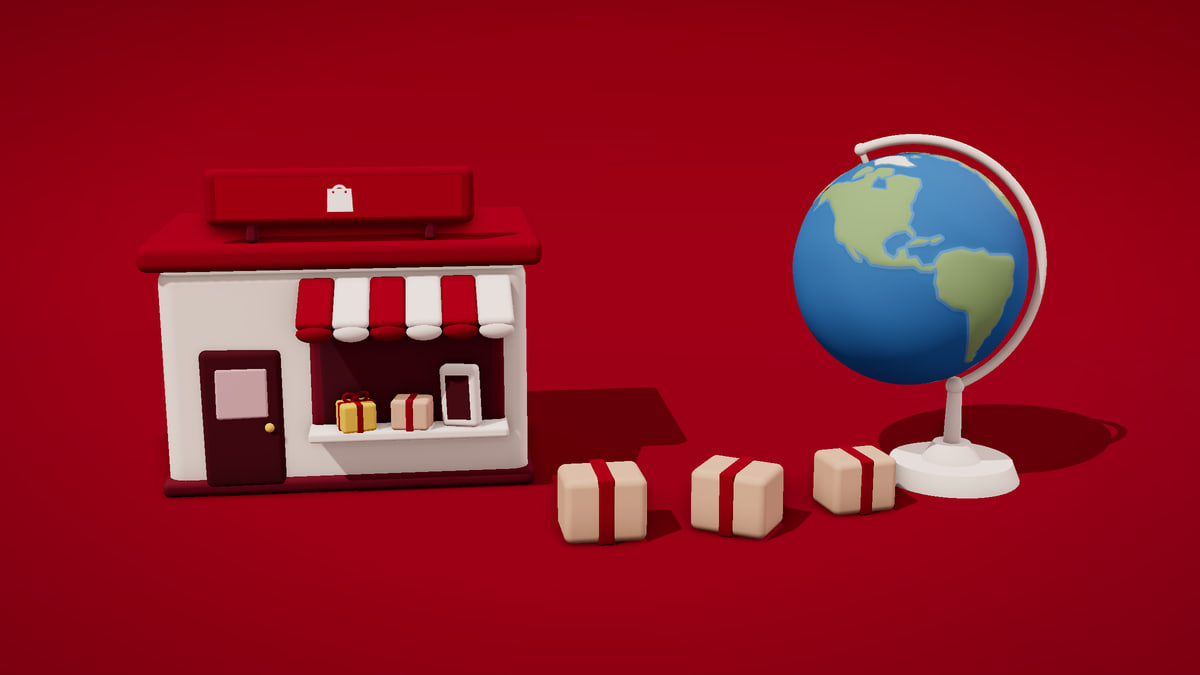
Every year, more people choose to shop online. According to eMarketer, one in five dollars spent in retail worldwide now goes through the internet, and that share is projected to keep climbing for the rest of the decade. Your customers already shop online. The only question is whether they buy from you or from your competitor.
A physical store will always be valuable: the customer sees the product, asks questions, and often walks out with it the same day. But an online store gives your business something a physical one can’t, and today having one doesn’t mean giving up the other. Here’s why it’s worth taking the step.
1. You reach far more people
An online store turns anyone with an internet connection into a possible customer. Selling only in person limits your business to whoever can and wants to visit your location. Someone who lives far from your area, or simply doesn’t pass through it, often ends up buying from your competitor out of pure convenience.
Online, that boundary disappears. Anyone searching for what you sell is a couple of clicks away from finding you, seeing your product, and buying it, wherever they live. Your market stops being your neighborhood and becomes your city, your country, or the whole region. And it’s not a small market: global ecommerce sales topped 6.3 trillion dollars in 2024, according to eMarketer. A business without an online store simply isn’t in the room where that money changes hands.
2. You make buying easier for your customer
Your shop closes at eight. Your online store never closes. The customer who remembers they need your product at eleven at night can buy it right then, instead of forgetting about it by morning. That sale, which a physical shop would have lost, closes on its own online.
Think about the last time you walked into a store looking for something specific and got lost among the shelves. If you were in a hurry, you probably left without buying. Online, the customer types what they want and finds it in seconds, with photos, price, and description in view.
3. You build trust with people who don’t know you yet
Reviews convince new customers better than any ad. Someone who doesn’t know your brand almost always hesitates before buying. When they see that other people like them have already bought your product and were happy, the perceived risk drops and the decision becomes easy.
This is called social proof, and it’s one of the strongest buying signals there is. What convinces people is seeing others like them, in the same situation, already decided and happy with the purchase. That’s worth more than any expert’s opinion. It’s a signal a physical shop has no way to show, and one you can put in plain sight online, where every satisfied customer keeps doing the convincing for you long after they’ve bought.
4. Your customer already expects to buy from you online
Buying from a phone stopped being a luxury and became the norm. This is the uncomfortable part, but it needs saying: if your competitor has an online store and you don’t, every customer who prefers to buy from home goes to them. And they often win that sale with a worse product than yours, just by keeping open a door you left shut.
Your customer’s buying habits have already changed, and keeping up with them is different from chasing a trend. Whoever falls behind loses sales without even knowing they existed. They’re invisible sales: you never see the customer who wanted to buy from you, couldn’t, and moved on. And with ecommerce growing by double digits every year in the region, more of those customers slip away each month you stay offline.
5. You serve everyone at once, without the crowds
An online store has no capacity limit: it can serve a thousand people at the same time without anyone waiting in line. And that capacity also rescues sales a crowded shop would scare away.
Someone wants to walk into your shop, sees it packed, and turns around to save themselves the hassle. That person who left could have been your next loyal customer, someone about to make a good purchase. With an online store that sale stays with you, because the customer comes in whenever they want and buys at their own pace, no pushing and shoving. It also takes the load off your shop, since not everyone needs to show up in person to buy from you.
This shows most on the big days. On a Black Friday or at Christmas, when a shop is overrun with people, a store built on a platform like Shopify barely feels the difference, because they’re designed and tested to handle those traffic spikes. You take care of your product and your customers, and the platform takes care of surviving the rush.
6. You can measure and improve what a shop floor hides
In a physical shop you never know how many people walked in, looked at a product, and left empty-handed. An online store tells you everything: which products get the most views, where people abandon their cart, and where your paying customers come from.
With that information you stop guessing. You can adjust prices, swap out a photo that isn’t landing, or double down on the product people search for most, then watch the numbers move. Every decision rests on real data from your customers instead of a hunch, and you can keep making small tweaks like these month after month as the numbers tell you what’s working.
So, does an online store replace the physical one?
No, and it would be a mistake to see it that way. A physical store offers something digital can’t replicate: seeing the product in person, sorting out doubts with someone on your team, and taking it home the same day. What an online store does is add reach, availability, trust, and data to what you already have. The two channels complement each other and give the customer control over how they prefer to buy from you.
Building an online store that actually works isn’t a matter of uploading a few photos and waiting. You have to pick the right platform (Shopify, WooCommerce, or Magento, depending on the case), design the buying experience, and get right every detail that nudges the customer toward the purchase. That’s exactly what we do: build online stores designed to sell, with the good looks that come along for the ride. If you’re thinking about taking the step, let’s talk.
Frequently asked questions
Do I need to close my physical store to sell online?
No. The two channels complement each other. A physical store gives you presence and face-to-face contact, and an online store adds reach and sales outside your opening hours. The ideal setup is having them work together and letting the customer choose how they prefer to buy.
How much does it cost to build an online store?
It depends on the platform and how custom you want the experience. There are options for almost any budget. It's best to see it as an investment: it opens a new sales channel that, done well, pays for itself over time.
Which platform is best for selling online?
It depends on your product, your sales volume, and how much you want to customize. Shopify is usually the quickest starting point, while WooCommerce and Magento give more control to those who need it. Choosing the right one from the start saves you from rebuilding everything later.
Is it worth selling online if I'm a small business?
Yes, sometimes even more than for a large one. An online store gives a small business the same reach that used to require several locations. It's the most accessible way to compete for customers who would otherwise never have found you.
How long does it take to launch an online store?
A simple store can be running in a few weeks. A custom one, with a large catalog or integrations, takes longer. The timeline depends less on the technology and more on having your products, prices, and shipping sorted out before you start.
How do I get people to find my online store?
Having the store is only the first step. To be found you need to work on search engine optimization (SEO), show up in AI search answers, and gather reviews. Without that, the store exists but nobody finds it, which is why visibility is part of the job.
Ready to sell online?
We'll build you a store designed to sell. Tell us what you have in mind and we'll get back to you within 48 business hours.
Message received.
Thanks for writing. We'll reply personally within 48 business hours.